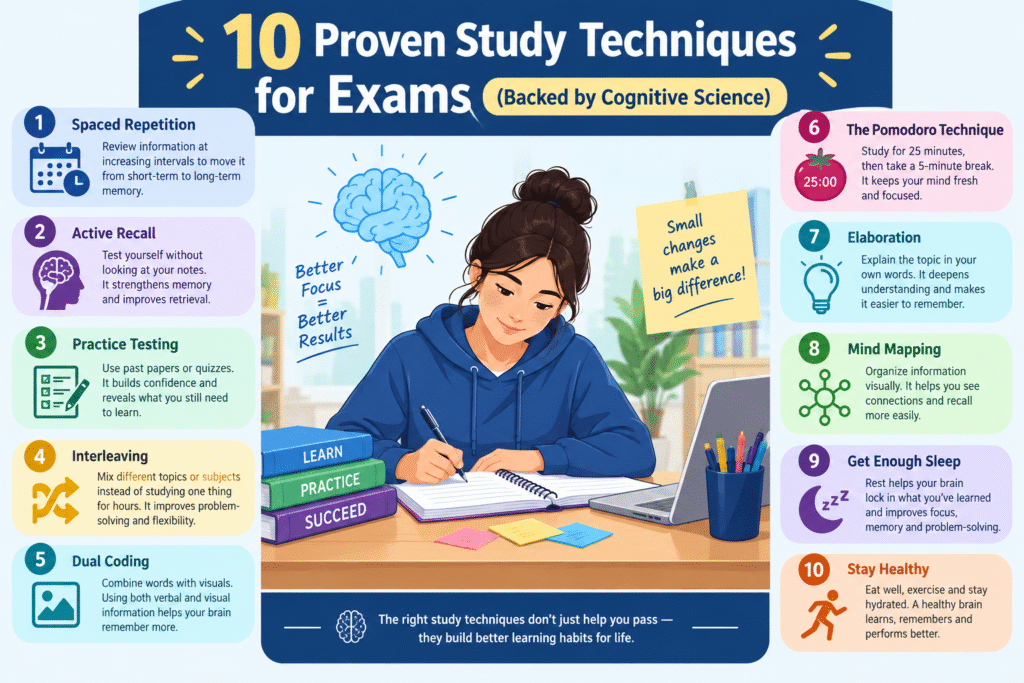
Have you ever studied for hours, gone to bed late, and struggled to remember basic facts during an exam? You might think you didn’t study hard enough. However, sleep plays an important role in how your brain learns and retains information.
Your brain doesn’t simply switch off when you fall asleep. It continues processing the day’s experiences and strengthening newly formed memories. Adequate sleep also prepares your brain to absorb new information the following day. That’s why sacrificing rest for extra study hours may not always pay off.
Understanding the connection between sleep and memory can help students develop better study habits and recognize when persistent sleep problems need attention.
How the Brain Processes Memories During Sleep
Learning doesn’t end when you close your books. Your brain first encodes new information while you read, listen, or practice. It then consolidates these memories, making them more stable and easier to recall later.
According to Daniel Noyed, a Certified Sleep Science Coach at Sleep Foundation, both non-rapid eye movement (NREM) and rapid eye movement (REM) sleep support memory consolidation. These sleep stages help the brain process and retain information.
NREM sleep helps organize and strengthen selected memories. REM sleep also supports memory processing, particularly for emotional experiences.
Sleep matters before learning, too. Adequate rest prepares your brain to absorb new information. After studying, sleep helps preserve what you’ve learned. Lack of sleep can interfere with concentration, learning, and memory recall. This explains why studying late into the night may not always improve exam performance.
Think of sleep as part of learning itself. Your brain isn’t switching off. It’s processing the day’s experiences and helping you retain useful information.
Why Sleep Matters for Students and Exam Preparation
Think about what happens when you study until 2 a.m. You might cover more chapters, but you could struggle to concentrate the next morning.
Research suggests that better sleep can translate into measurable academic gains. A 2026 field experiment involving more than 1,100 US college students found that a sleep-focused intervention increased average nightly sleep by 19 minutes. Students were also 26% more likely to get at least seven hours of sleep on weeknights.
Their semester course performance improved by 0.075–0.089 grade points, equivalent to a 0.10–0.11 standard deviation increase. Interestingly, total study time remained unchanged. Students shifted some studying from late evening to morning instead. The findings suggest that improving sleep habits may support better grades without requiring longer study hours.
How Much Sleep Does Your Brain Need?
Sleep requirements depend on age. School-age children generally need nine to twelve hours nightly. Teenagers need eight to ten hours, while adults should regularly get at least seven hours.
However, the picture isn’t encouraging for US students. A study published in Pediatrics, highlighted by The Guardian in May 2026, analyzed data from more than 400,000 students. It found that only 22% of older adolescents reported getting at least seven hours of sleep per night. That’s below the recommended eight to ten hours for teenagers.
Getting enough sleep consistently matters more than trying to recover lost rest over the weekend. Frequent awakenings can also leave you tired despite spending enough time in bed. If you’re preparing for an exam, protect your bedtime instead of treating sleep as optional.
How Stress and Sleep Problems Can Disrupt Memory
Academic pressure can make sleep harder. Homework, late-night screen use, and anxiety may delay bedtime or interrupt rest. Poor sleep can then affect concentration and emotional regulation, creating another layer of stress.
Start by observing your habits. A sleep diary can track bedtime, waking times, and daytime tiredness. Self-screening questionnaires can also highlight potential concerns, but they cannot diagnose sleep disorders. If problems persist, seek professional advice.
The right professional depends on the symptoms. Physical issues, such as suspected sleep apnea, may require assessment by a sleep specialist.
However, when anxiety or depression contributes to sleep difficulties, a mental health professional can help. In primary care settings, a psychiatric mental health nurse practitioner (PMHNP) can assess mental health symptoms and discuss appropriate treatment options. These professionals often complete a PMHNP online program. It combines flexible online coursework with clinical training.
This allows working nurses to continue seeing patients while advancing their education. As Walsh University notes, they gain practical experience while developing the skills needed to provide effective mental health care.
Practical Ways to Improve Sleep and Remember More
You don’t need an elaborate routine to sleep better. A few consistent habits can make a difference.
- Maintain a schedule. Go to bed and wake up at similar times daily.
- Spread out your studies. Revise over several days instead of cramming everything into one night.
- Limit screen use. Put your phone aside before bedtime and allow yourself time to unwind.
- Improve your sleep environment. Keep your bedroom dark, quiet, and comfortably cool.
- Address persistent problems. Seek medical advice if sleep difficulties continue despite lifestyle changes.
You can also use sleep to support your revision. Review important material before bed, then test your recall the following morning. This helps you identify gaps in your understanding.
Remember, healthy sleep habits support learning, but they don’t replace regular study. Combining adequate rest with consistent revision gives your brain a better chance to retain information.
FAQs
Can naps help improve memory retention?
Short naps can improve alertness and may support memory, especially when you’re sleep-deprived. However, they cannot fully replace adequate nighttime sleep. If you’re preparing for an exam, maintain a consistent sleep schedule and consider brief, early-afternoon naps when you need extra rest.
Does sleeping too much affect memory?
Regularly sleeping longer than usual can sometimes accompany underlying health conditions or poor sleep quality. However, longer sleep isn’t automatically harmful, particularly when recovering from sleep deprivation. If excessive sleepiness persists despite adequate rest, consult a healthcare professional to investigate possible causes.
Can caffeine compensate for insufficient sleep while studying?
Caffeine may temporarily improve alertness and concentration, but it cannot replace sleep’s role in memory consolidation. Consuming caffeine late in the day can also make falling asleep more difficult. For better learning, prioritize sufficient rest instead of relying on coffee or energy drinks.
Key Research Findings and Takeaways
| NREM and REM sleep support memory consolidation | Both sleep stages contribute to memory processing |
| Better sleep can improve academic performance | Sleep increased by 19 minutes nightly; grades improved by 0.075–0.089 points |
| Teen sleep deprivation is a growing concern | Only 22% of older US teens reported at least 7 hours of sleep nightly |
| Sleep needs vary by age | Children need 9–12 hours, teens 8–10 hours, and adults at least 7 hours |
| Self-screening can flag sleep concerns but cannot diagnose disorders | Persistent symptoms may require professional assessment |
Sleep is an active part of learning. While you rest, your brain processes information and strengthens memories. Skipping sleep can affect the concentration and recall you need during exams.
Build your study schedule around regular sleep, consistent revision, and healthy routines. Avoid sacrificing rest for last-minute cramming. Small changes, such as maintaining a regular bedtime and limiting late-night screen use, can support better sleep.
If sleep problems persist or interfere with daily life, don’t rely on self-screening alone. Consult a healthcare professional to understand possible causes and explore suitable treatment. Addressing sleep difficulties can support your overall well-being and help you learn more effectively.