Most bachelor’s degrees require 120 credit hours to graduate, associate degrees typically require 60, and master’s degrees usually range from 30 to 60 depending on the program. At a standard full-time pace of 15 credits per semester, a bachelor’s degree takes about four years (eight semesters) to complete — though the actual number varies by school, major, and how many credits you take each term.
This guide breaks down exactly how many credits each degree type requires, how credit hours actually work, how your course load affects your graduation timeline, and how credits connect to your GPA.
Key Takeaways
- A bachelor’s degree typically requires 120 credit hours, an associate degree requires 60, and a master’s degree typically requires 30–60, depending heavily on the field.
- Taking 15 credits per semester keeps most students on track for a 4-year bachelor’s degree; the common full-time minimum of 12 credits per semester stretches that timeline closer to 5 years.
- Not all completed credits automatically count toward your specific degree — general education, major, and elective requirements each have their own credit minimums that need to be tracked separately.
How Many College Credits Do You Need to Graduate?
The exact number depends entirely on the degree type, but here are the standard benchmarks used by most US colleges and universities on a semester credit system:
Quick Reference: Credits Required by Degree Type
| Degree Type | Typical Credits Required | Typical Full-Time Timeline |
|---|---|---|
| Associate (AA/AS) | 60 credits | 2 years |
| Bachelor’s (BA/BS) | 120 credits | 4 years |
| Master’s | 30–60 credits | 1–2 years |
| Doctoral (PhD) | 60–120+ credits beyond the master’s | 4–7 years |
| Professional (JD) | ~90 credits | 3 years |
| Professional (MD) | ~130–140 credits | 4 years |
These are general benchmarks — always confirm your specific program’s exact requirement, since it can vary by institution, major, and accreditation standards.
How Credit Hours Actually Work
A credit hour (sometimes called a semester hour) is the standard unit used to measure academic coursework in the US. The traditional definition, based on the “Carnegie unit,” assumes:
- 1 hour of in-class instruction per week, plus
- 2 hours of expected outside coursework per week (homework, reading, studying),
- Sustained over a standard 15-week semester
So a typical 3-credit course involves about 3 hours of class time and 6 hours of outside work weekly — roughly 9 hours total per week, per course. A full-time student taking 15 credits (5 courses) is therefore expected to spend around 45 hours per week on coursework combined, similar to a full-time job.
Credits Needed by Degree Type: A Closer Look
Associate Degree (60 Credits)
Associate degrees are typically structured as:
- General education requirements: ~20 credits
- Major/core requirements: ~30 credits
- Electives: ~10 credits
At a full-time pace of 15 credits per semester, this takes about 2 years (4 semesters).
Bachelor’s Degree (120 Credits)
A bachelor’s degree generally breaks down as:
- General education requirements: ~40–45 credits
- Major-specific requirements: ~40–60 credits (varies significantly by field)
- Electives: ~15–35 credits
At 15 credits per semester, this takes the standard 4 years (8 semesters). Some rigorous majors (engineering, for example) may require closer to 130–140 credits due to heavier core requirements, sometimes extending the timeline slightly even at a full-time pace.
Master’s Degree (30–60 Credits)
Master’s programs vary widely by field:
- Many humanities and social science master’s programs: ~30–36 credits
- STEM and technical master’s programs: ~30–45 credits
- Some professional master’s degrees (MBA, for example): ~36–60 credits
At a full-time pace, most master’s degrees take 1 to 2 years to complete.
Doctoral and Professional Degrees
Doctoral programs (PhD) typically require 60–120+ credits beyond the master’s level, combined with dissertation research, and commonly take 4–7 years depending on the field. Professional degrees like a JD (law) or MD (medicine) have their own structured credit requirements — roughly 90 credits over 3 years for a JD, and 130–140 credits over 4 years for an MD — set by their respective accrediting bodies.
Full-Time vs. Part-Time Pace and Graduation Timeline
Your credit load per semester directly determines how long a degree takes.
Credits Per Semester vs. Time to Complete a 120-Credit Bachelor’s Degree
| Credits Per Semester | Semesters Needed | Approximate Years |
|---|---|---|
| 12 (full-time minimum) | 10 | 5 years |
| 15 (on-track pace) | 8 | 4 years |
| 18 (accelerated) | ~7 | 3.5 years |
| 6 (part-time) | 20 | 10 years |
Many schools and states have promoted “15 to Finish” campaigns specifically because the common full-time minimum of 12 credits, while technically full-time, doesn’t actually keep students on a 4-year track — it takes 15 credits per semester to hit that traditional benchmark.
How Credits Affect Your GPA
Credit hours don’t just track progress toward your degree — they also directly determine how much weight each course carries in your GPA calculation.
Why Credit-Weighting Matters
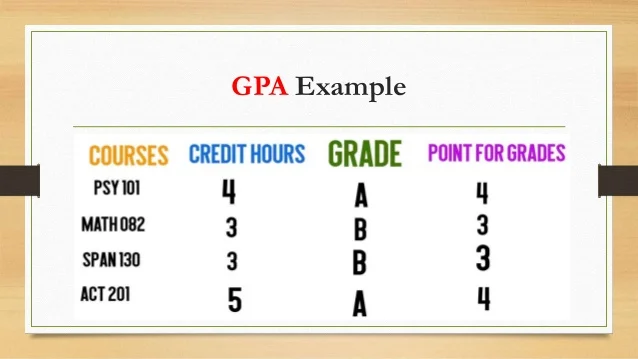
GPA isn’t a simple average of your letter grades — it’s a credit-weighted average. A grade in a 4-credit course affects your GPA twice as much as the same grade in a 2-credit course. This is exactly why two students with identical letter grades across their transcripts can end up with different GPAs, depending on how many credits each course was worth.
Formula: GPA = Sum of (Grade Points × Credit Hours) ÷ Total Credit Hours
To see the full method, check how to calculate a GPA from letter grades, and use a GPA calculator, college GPA calculator, or cumulative GPA calculator to calculate your own credit-weighted average precisely rather than estimating.
Tracking Both Credits and GPA Each Semester
Use a semester grade calculator or average grade calculator each term to make sure you’re staying on pace both in terms of total credits earned and GPA maintained — the two numbers matter for different, equally important reasons.
Financial Aid, Credit Pace, and Graduation Requirements
Credit accumulation isn’t just about reaching a total — the pace at which you earn credits matters too, particularly for financial aid.
- Satisfactory Academic Progress (SAP): Federal financial aid requires students to complete credits at a minimum pace (commonly around 67% of attempted credits) in addition to maintaining a minimum GPA, usually 2.0.
- Full-time enrollment status: Many scholarships, on-campus housing eligibility, and even visa requirements for international students require maintaining full-time credit status (typically 12+ credits per semester).
- Degree audits: Most schools provide a formal “degree audit” tool showing exactly which credit requirements are satisfied and which remain — checking this regularly avoids unpleasant surprises close to a planned graduation date.
If you’re navigating GPA requirements alongside credit tracking, is a 3.5 GPA good for college and can I raise my GPA quickly are worth reviewing together with your credit progress, since both numbers are usually tracked — and required — simultaneously.
Common Mistakes Students Make About College Credits

Mistake 1: Assuming Every Completed Credit Counts Toward the Degree
Elective courses outside your requirements, repeated courses, or credits from a dropped major can accumulate without actually advancing your specific degree requirements. Always check your degree audit rather than assuming total credits earned equals credits that count.
Mistake 2: Assuming Transfer Credits Transfer 1:1
Credits from another institution — especially community college or study-abroad credits — don’t always transfer at full value, and some may not satisfy specific major requirements even if the total credit count transfers. Always confirm with your registrar before assuming transfer credits will apply exactly as expected.
Mistake 3: Confusing “Full-Time” With “On Track for 4 Years”
Twelve credits per semester qualifies as full-time status at most schools, but it doesn’t complete 120 credits in four years — it takes 15 per semester to hit that traditional pace. Students aiming for a strict 4-year timeline need to plan for 15, not just the full-time minimum.
Mistake 4: Not Accounting for Major-Specific Credit Requirements Early
Some majors have prerequisite chains that only run once a year, meaning a late start or a failed prerequisite can delay graduation by an entire year, not just a semester. Planning major requirements early avoids this bottleneck.
Mistake 5: Ignoring How Credit Hours Weight GPA
Since GPA is credit-weighted, treating every course as equally impactful is inaccurate — a strong grade in a 4-credit course does more for your GPA than the same grade in a 1-credit course. Understanding how to calculate GPA with weighted courses, alongside plain credit-hour weighting, gives a fuller picture of your actual standing.
Tips for Graduating On Time
1. Aim for 15 Credits Per Semester, Not Just 12
If a traditional 4-year timeline is the goal, 15 credits per semester is the real target — the full-time minimum of 12 alone will stretch a 120-credit degree closer to five years.
2. Check Your Degree Audit Every Semester
Most schools provide a formal tool showing exactly which requirements remain. Reviewing it regularly — not just before a planned graduation date — catches gaps while there’s still time to address them.
3. Plan Prerequisite-Heavy Majors Early
If your major has courses that are only offered once a year, map out that sequence as early as possible to avoid a full-year delay from a single missed or failed prerequisite.
4. Use Summer or Winter Sessions Strategically
Taking one or two courses during a summer or winter term can help you stay on pace without increasing your regular semester course load, particularly useful for catching up after a lighter semester.
5. Track Your Credit-Weighted GPA Alongside Your Total Credits
Use a cumulative GPA calculator each semester so you’re monitoring both progress toward your degree and your academic standing at the same time — falling behind on either one can create separate problems.
6. Meet With an Academic Advisor Regularly
Advisors can catch scheduling conflicts, prerequisite bottlenecks, and requirement changes well before they become urgent, especially useful for double majors, minors, or students considering a major change.
Key Takeaways
- A bachelor’s degree typically requires 120 credit hours, an associate degree requires 60, and master’s programs range from 30–60 depending on the field.
- 15 credits per semester — not the 12-credit full-time minimum — is the real pace needed for a traditional 4-year bachelor’s degree.
- Credit hours are based on the traditional Carnegie unit: roughly 1 hour of class plus 2 hours of outside work per credit, per week.
- GPA is credit-weighted, meaning higher-credit courses affect your overall average more than lower-credit ones.
- Financial aid eligibility depends on both a minimum GPA and a minimum pace of credit completion under Satisfactory Academic Progress rules.
- Not every completed credit automatically counts toward your specific degree — checking your degree audit regularly is the most reliable way to stay on track.
Frequently Asked Questions
1. How many credits do you need to graduate with a bachelor’s degree?
Most bachelor’s degrees require 120 credit hours, though some majors — particularly engineering and other technical fields — may require closer to 130–140 credits due to more extensive core requirements.
2. How many credits do you need for an associate degree?
Most associate degrees require 60 credit hours, typically completed in about 2 years at a full-time pace.
3. How many credits per semester is considered full-time?
Most schools define full-time status as 12 credits per semester at the undergraduate level, though this pace alone doesn’t complete a 120-credit degree within the traditional 4-year timeline.
4. How many credits do I need per semester to graduate in 4 years?
15 credits per semester (across 8 semesters) is the standard pace needed to complete a 120-credit bachelor’s degree in exactly 4 years.
5. Do all college credits count toward graduation?
Not necessarily. Elective credits outside your specific requirements, repeated courses, or credits from an abandoned major can accumulate without advancing your actual degree progress. Always check your school’s degree audit to confirm which credits count.
6. How many credits do you need for a master’s degree?
Most master’s degrees require 30 to 60 credit hours, varying significantly by field — many humanities and social science programs sit closer to 30–36 credits, while some professional master’s programs require up to 60.
7. Does the number of credits affect my GPA?
Yes, directly. GPA is a credit-weighted average, meaning a grade in a higher-credit course has a larger effect on your overall GPA than the same grade in a lower-credit course.
8. What happens if I don’t complete enough credits per semester?
Falling below full-time credit status can affect financial aid eligibility, on-campus housing requirements, and scholarship requirements, in addition to simply extending your graduation timeline. Federal financial aid specifically requires meeting a minimum pace of credit completion, not just a minimum GPA.
9. Can transfer credits count toward my degree requirements?
Often, yes, but not automatically at full value — some transfer credits may only count as general electives rather than satisfying specific major or general education requirements. Always confirm transfer credit evaluations with your registrar’s office directly.
10. How do I know exactly how many credits I still need?
Most colleges provide a formal degree audit tool through the student portal, showing exactly which requirements are satisfied and which remain. Checking this regularly — rather than assuming based on total credits earned — is the most reliable way to track real progress toward graduation.
Conclusion
Most bachelor’s degrees require 120 credit hours, associate degrees require 60, and master’s degrees typically fall between 30 and 60, depending on the field. The number that actually determines your timeline, though, isn’t just the total — it’s your pace: 15 credits per semester keeps a bachelor’s degree on the traditional 4-year track, while the common 12-credit full-time minimum stretches that timeline closer to five years.
Credits and GPA are connected but separate things worth tracking together — one measures progress toward your degree, the other measures your academic standing along the way, and both matter for financial aid, scholarships, and graduation requirements alike.
Use GPA calculators to track your credit-weighted average each semester, check your degree audit regularly rather than assuming, and plan prerequisite-heavy requirements early. Staying on pace with both credits and GPA is the most reliable path to graduating on time.