A 20/25 grade is a fractional score that tells you exactly how many points a student earned out of the total possible points on a test, quiz, or assignment. In this case, the student earned 20 points out of a maximum of 25 points.
This type of raw score appears on everything from classroom quizzes to standardized assessments. On its own, a fraction like 20/25 is useful for understanding performance on a single task but to compare it against grading scales, college admissions benchmarks, or GPA calculations, you need to convert it into a percentage or letter grade first.
Understanding what your score means in context is a core academic skill. Whether you’re a student wondering if your grade is “good enough,” a parent trying to support your child, or a teacher designing assessments, knowing how to read and interpret fractional grades is essential.
How to Convert 20/25 to a Percentage
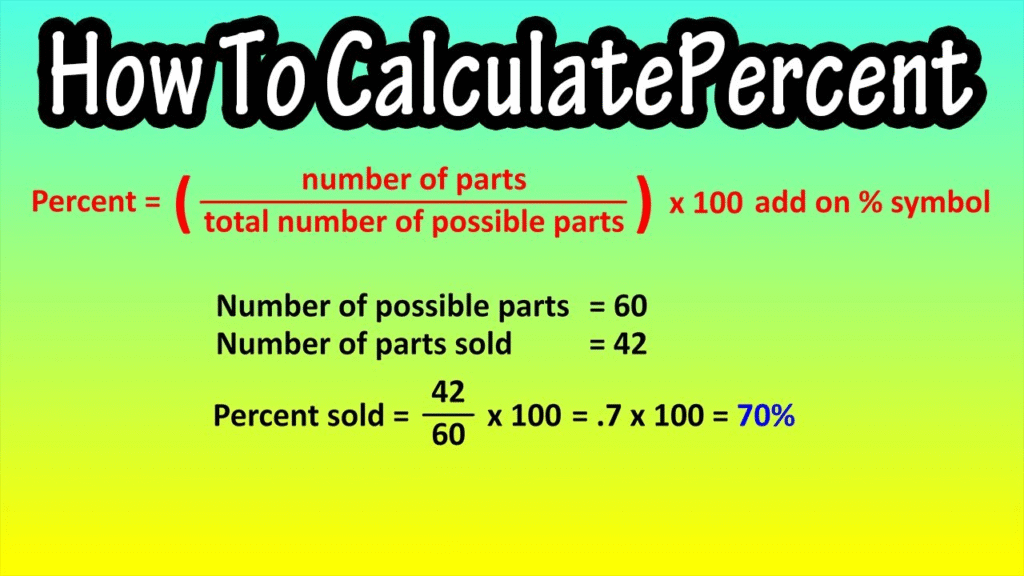
Converting any fraction to a percentage follows one simple formula:
Percentage = (Points Earned ÷ Total Points) × 100
For a 20/25 grade:
(20 ÷ 25) × 100 = 80%
That’s it. A score of 20 out of 25 is 80 percent. This single calculation unlocks everything else letter grade, GPA estimate, class standing, and more.
Need to do this for a different score? Use the grade percentage calculator to convert any fraction instantly.
Why Does the Percentage Matter?
Most grading scales used in K–12 schools, colleges, or universities are built around percentage ranges. Until you convert a raw fraction to a percentage, you can’t place it on a letter scale or compare it meaningfully to other scores. For example, if you also want to know what grade is 15/20, the same formula applies: (15 ÷ 20) × 100 = 75%.
What Letter Grade Is 20/25?
On the standard U.S. grading scale, 80% falls squarely in the B range. Here’s how the letter breakdown looks:
| Percentage Range | Letter Grade | Performance Level |
| 90% – 100% | A | Excellent |
| 80% – 89% | B | Above Average |
| 70% – 79% | C | Satisfactory |
| 60% – 69% | D | Below Average |
| Below 60% | F | Failing |
Since 80% sits at the bottom edge of the B range, it’s worth understanding the nuance here. A score of 80% is a solid B not a B+, and certainly not an A. If your school uses plus/minus grading, an 80% would typically be a B– at institutions where B– starts at 80%, or a plain B where the range begins at 80%.
Are you wondering whether nearby scores shift the letter grade? Check out what grade is 75%, what grade is 70%, or what grade is 80% to see how a few percentage points can change your letter grade.
What GPA Is a 20/25 Grade?
On the standard 4.0 unweighted GPA scale, an 80% (B) typically converts to a 3.0 GPA. Here is a standard GPA conversion table:
GPA Conversion Table
| Percentage | Letter Grade | 4.0 GPA Scale |
| 97–100% | A+ | 4.0 |
| 93–96% | A | 4.0 |
| 90–92% | A– | 3.7 |
| 87–89% | B+ | 3.3 |
| 83–86% | B | 3.0 |
| 80–82% | B– | 2.7 |
| 77–79% | C+ | 2.3 |
| 73–76% | C | 2.0 |
| 70–72% | C– | 1.7 |
| 67–69% | D+ | 1.3 |
| 63–66% | D | 1.0 |
| 60–62% | D– | 0.7 |
| Below 60% | F | 0.0 |
So a 20/25 (80%) sits at the B– to B boundary depending on your school’s specific scale, your GPA points for this grade will be either 2.7 or 3.0. To understand whether 70% is a 3.0 GPA, you can see from this table that 70% is actually closer to a 1.7–2.0, not a 3.0. The difference matters, especially for college applications.
Understanding Grading Scales
Grading scales are structured systems that translate raw scores into meaningful academic measures. They exist because a number alone, say, 20 out of 25 doesn’t communicate much on its own. Is that exceptional? Average? Barely passing? The grading scale answers that question.
Why Schools Use Grading Scales
Schools use grading scales to:
- Provide consistent, standardized feedback across teachers, subjects, and cohorts
- Allow colleges and employers to compare applicants fairly
- Give students clear benchmarks to work toward
- Support data-driven instruction by identifying where students are struggling
- Meet state and national accreditation standards
There are several distinct types of grading scales in use today. Understanding each one helps you interpret your grades accurately no matter which system your school uses.
Percentage Grading Scale
The percentage scale is the most universal grading system in the United States and many other countries. Every score is expressed as a number from 0 to 100, representing the portion of total possible points earned.
Formula: (Points Earned ÷ Total Points) × 100
For a 20/25 score: (20 ÷ 25) × 100 = 80%
Percentage grading is transparent and precise. You always know exactly where you stand. Teachers use it to calculate grade averages across multiple assignments, and students can use it to track progress throughout the semester.
Letter Grading Scale
The letter grading scale maps percentage ranges to letter grades (A, B, C, D, F). It’s the most recognizable grading system in American education and is used from elementary school through college and university.
Most institutions follow this standard breakdown:
- A (90–100%) — Excellent; demonstrates mastery
- B (80–89%) — Good; above-average understanding
- C (70–79%) — Satisfactory; meets basic requirements
- D (60–69%) — Poor; minimal understanding demonstrated
- F (Below 60%) Failing; does not meet requirements
Some schools use plus and minus modifiers (A+, A, A–, B+, B, B–, etc.) to add precision. For example, 89.5% could be a B+ or an A– depending on the school a question explored in detail is 89.5 an A or B?
Similarly, the boundary grades cause the most confusion. Is 70% a C or D? Is 60% an F or D? Is C better than C– grade? These edge cases depend on your school’s specific policy.
GPA Grading Scale
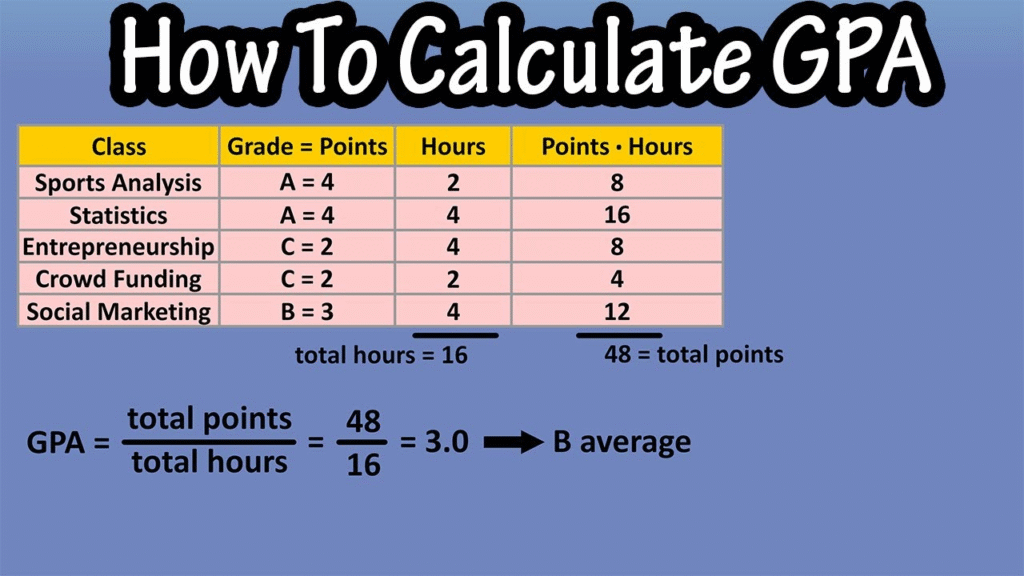
GPA (Grade Point Average) converts letter grades into a numerical score, typically on a 0.0–4.0 scale. Colleges and universities use GPA as a single, comparable measure of academic performance across all courses.
How GPA is calculated:
- Assign grade points to each letter grade (A = 4.0, B = 3.0, C = 2.0, D = 1.0, F = 0.0)
- Multiply each course’s grade points by its credit hours
- Divide the total grade points by total credit hours
Example:
- English (3 credits) — B (3.0) → 9.0 grade points
- Math (4 credits) — B– (2.7) → 10.8 grade points
- History (3 credits) — A– (3.7) → 11.1 grade points
Total: 30.9 ÷ 10 credits = 3.09 GPA
Want to check your own numbers? Try the GPA calculator from letter grades or learn how to calculate GPA with weighted courses.
Standards-Based Grading
Standards-based grading (SBG) is an alternative system that evaluates students against specific learning standards rather than accumulating points. Instead of earning a percentage, students receive a proficiency rating for each skill or standard:
| Rating | Meaning |
| 4 | Exceeds the standard |
| 3 | Meets the standard |
| 2 | Approaching the standard |
| 1 | Below the standard |
Under SBG, a 20/25 score wouldn’t exist as reported to parents. Instead, a teacher would assess whether the student demonstrated mastery of each underlying skill on the test. SBG is especially common in elementary schools and competency-based programs. It prioritizes what students know over how many points they’ve accumulated.
Pass/Fail Grading
Some courses — especially electives, labs, internships, and certain college seminars — use a simple Pass/Fail (P/F) system. There is no letter grade or percentage reported; students either pass or fail.
In most institutions:
- A score of 60% or higher (sometimes 70%) = Pass
- Below that threshold = Fail
A 20/25 (80%) would comfortably be a Pass under any standard pass/fail threshold. Pass/fail courses typically do not affect GPA at all, or they’re calculated separately, depending on the institution.
Grading Scale Comparison Table
| Score | Percentage | Letter Grade | Unweighted GPA | Weighted GPA (AP/IB) | Performance Level |
| 25/25 | 100% | A+ | 4.0 | 5.0 | Perfect |
| 23/25 | 92% | A– | 3.7 | 4.7 | Excellent |
| 20/25 | 80% | B / B– | 2.7–3.0 | 3.7–4.0 | Above Average |
| 19/25 | 76% | C+ | 2.3 | 3.3 | Satisfactory |
| 18/25 | 72% | C | 2.0 | 3.0 | Average |
| 17/25 | 68% | D+ | 1.3 | 2.3 | Below Average |
| 15/25 | 60% | D | 1.0 | 2.0 | Poor |
| 14/25 | 56% | F | 0.0 | 0.0 | Failing |
For similar fractional breakdowns, explore what grade is 9/11 on a test and what grade is 15/20 to compare.
International Grading Systems
Grading is not universal. An 80% means different things in different countries. Here’s a quick global comparison:
| Country | 80% Equivalent | Description |
| United States | B (80–89%) | Above average; good performance |
| United Kingdom | Upper Second (2:1) | Strong degree classification |
| Canada | B (75–84%) | Good; typically above average |
| Germany | Gut (2) | “Good” — scale runs 1 (best) to 6 |
| France | 16/20 | Strong score; above average |
| Australia | Credit (70–79%) / Distinction (80–89%) | Distinction at 80% |
| India | First Division | 80%+ is First Division or Distinction |
| Japan | B (70–79%) / A (80%+) | A-grade level at most universities |
This comparison matters when applying to international universities, evaluating foreign transcripts, or understanding exchange student performance. An 80% earned in one system doesn’t always map directly to the same standing in another.
How Grading Scales Affect GPA and Academic Performance
Your grading scale doesn’t just label your performance it actively shapes your academic future. Here’s how:
Impact on GPA Calculation
Every grade you earn contributes to your cumulative GPA. A single 80% in a 3-credit course contributes 9.0 weighted grade points to your total. Over a full year with 30 credits, a consistent 80% across courses produces approximately a 3.0 GPA which is competitive but not exceptional at most universities.
If you need to know how much a test grade is worth or what the weight of a test grade is in your overall course grade, the answer depends on how your teacher has structured the course syllabus. Most courses weight tests more heavily than homework or quizzes sometimes 50–70% of the final grade.
Impact on College Admissions
Most selective universities look at both the unweighted GPA (which reflects raw performance) and the course rigor (which reflects how challenging your schedule was). An 80% in all AP courses may be viewed more favorably than an 80% in all standard courses.
Impact on Scholarships and Honors
Many scholarship programs require a minimum GPA often 3.0, 3.5, or higher. Since 80% sits right at the 3.0 boundary (depending on scale), students in this range should be aware that individual grade decisions can move them above or below scholarship thresholds. Can you raise your GPA quickly? yes, but it requires strategic effort.
Common Grade Conversion Methods
Method 1: Direct Percentage Conversion
Divide points earned by total points and multiply by 100. This is the most direct method and the basis for all other conversions.
(20 ÷ 25) × 100 = 80%
Method 2: Letter Grade Lookup
Once you have a percentage, match it to your school’s published letter grade scale. Most U.S. schools use the standard A–F system, but always verify your institution’s specific thresholds.
Method 3: GPA Point Assignment
Match the letter grade to the standard 4.0 GPA point scale and then calculate a weighted average across all courses. Use the semester grade calculator or the final grade calculator to automate this.
Method 4: Grade Curving
Teachers sometimes curve grades to adjust the class distribution. A test curve might add a flat number of points to every score, or it might scale all grades proportionally. If your teacher curves, your 20/25 (80%) could shift upward. Learn more about how to curve test grades.
Method 5: Weighted Average Calculation
When a course has multiple graded components (tests, homework, participation), each component carries a different weight. Your final grade is not a simple average, it’s a weighted average of your grades. A strong 80% on a test worth 40% of your grade impacts your final course grade differently than an 80% on homework worth 10%.
FAQ
What is 20 out of 25 as a percentage?
20 out of 25 is 80%. You calculate it by dividing 20 by 25, then multiplying by 100: (20 ÷ 25) × 100 = 80.
Is 20/25 a good grade?
Yes. An 80% is a B grade — above average and reflects solid understanding of the material. It is good, but there is room to improve toward an A (90%+).
What letter grade is a 20/25?
Under the standard U.S. grading scale, 20/25 (80%) is a B — or a B– depending on whether your school uses a 80–83 or 80–89 B– range.
What GPA does a 20/25 grade give you?
A 20/25 (80%) converts to approximately a 2.7 to 3.0 GPA on a 4.0 scale, depending on your school’s specific letter grade cutoffs. In an AP or honors course on a weighted scale, it may be a 3.7–4.0.
Is 80% the same as a B everywhere?
Not exactly. In most U.S. schools, 80% is a B. In some institutions, 80% is a B–. Internationally, 80% may mean different things — for example, in Australia it’s a Distinction, while in Germany it’s roughly equivalent to a “Gut” (2).
How does a 20/25 grade affect my GPA?
A single 80% grade adds weighted grade points to your cumulative GPA total. In a 3-credit course, it contributes 8.1–9.0 grade points (2.7 × 3 or 3.0 × 3) depending on whether your school treats 80% as a B– or B.
Can a 20/25 grade hurt my chances for college admission?
A single 80% is unlikely to hurt college chances on its own. Admissions offices look at cumulative GPA, course rigor, trends over time, and many other factors. Consistent performance in challenging courses matters more than any single test result.
How do I raise a grade after scoring 20/25?
Review your incorrect answers to identify patterns, seek teacher feedback, increase practice with problem-solving under test conditions, and use a what grade do I need calculator to determine exactly what score is needed on future work to hit your target.
What’s the difference between 20/25 and 15/20?
Both convert differently: 20/25 = 80%, while 15/20 = 75%. That 5-percentage-point gap puts them in different letter grade territories under most scales — 80% is a B and 75% is a C+ or C.
Does a 20/25 grade count as passing?
Yes, in virtually every academic context. An 80% far exceeds the typical passing threshold of 60–70%. In pass/fail courses, it would easily be recorded as a Pass.
Key Takeaways
- 20/25 = 80% — calculated using: (Points Earned ÷ Total Points) × 100
- Letter grade: B (or B– depending on your school’s scale)
- GPA equivalent: 2.7–3.0 on a 4.0 unweighted scale; up to 4.0 on a weighted scale for AP/IB courses
- Performance level: Above average — solid understanding with clear room to grow
- Grading scales vary: Percentage, letter grade, GPA, weighted GPA, standards-based, and pass/fail systems all exist and serve different purposes
- International comparison: 80% is excellent in some countries (Australia’s Distinction) and simply “good” in others (U.S. B grade)
- Strategic improvement: Analyze where points were lost, focus study effort on high-weight assessments, and track your grade trajectory throughout the semester
- GPA impact: One grade rarely defines your GPA — consistency across courses over time is what matters most
Conclusion
A score of 20 out of 25 or 80% is a genuinely good academic result. It signals above-average mastery of the tested material and lands solidly in the B category on U.S. grading scales. Depending on your school’s specific GPA conversion policy, it translates to 2.7–3.0 GPA points for a standard course or up to 4.0 for an AP or IB course on a weighted scale.
More important than any single score, though, is understanding how grading systems work. Whether your school uses percentage scales, letter grades, GPA conversions,