What Is a 10/15 Grade?
Getting a score of 10 out of 15 on a quiz, assignment, or test raises a natural question: is this good enough? The short answer is that 10/15 equals 66.67%, which most grading scales classify as a D letter grade just above a failing mark in many school systems. But that single number carries a lot of context depending on the grading scale your school uses, the weight of the assignment, and your overall academic goals.
This guide breaks everything down clearly from what grading scales are and how they work, to exactly where 10/15 lands on every major scale, and what you can do to push that number higher.
What Does 10/15 Mean? The Quick Math
Before diving into grading systems, let’s nail down the basic calculation.
Formula:
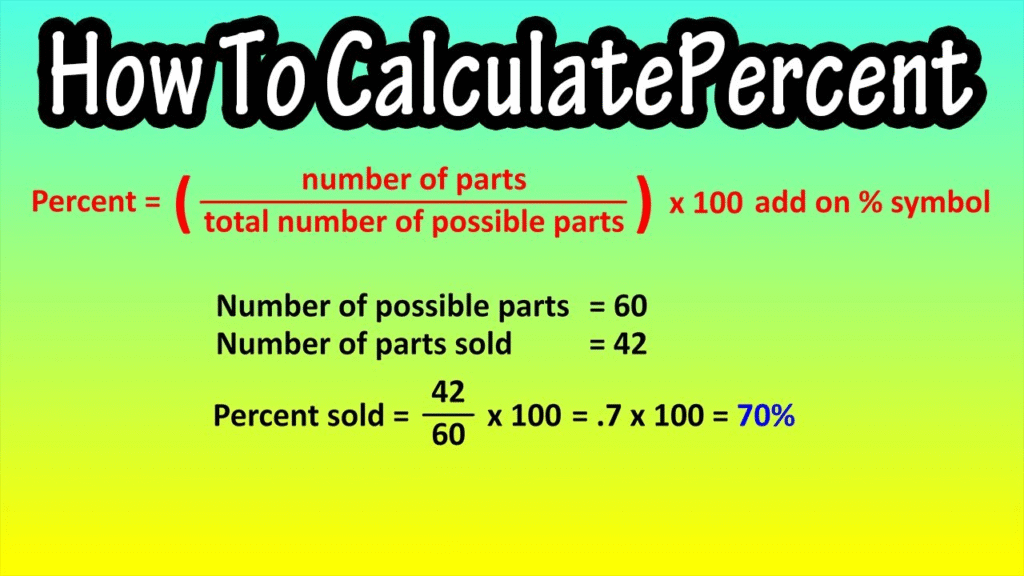
Percentage = (Points Earned ÷ Total Possible Points) × 100
For 10/15:
(10 ÷ 15) × 100 = 66.67%
That’s your raw percentage. Everything else – your letter grade, your GPA impact, your pass/fail status — flows from that number. You can use a grade percentage calculator to convert any score instantly.
What Is a Grading Scale?
Grading scale is a standardized system that converts raw scores (like 10/15) into a meaningful academic label whether that’s a letter, a percentage band, a GPA point, or a simple pass/fail. Schools use grading scales because they:
- Create a consistent, fair way to evaluate student performance across different subjects and teachers
- Allow colleges and employers to compare students from different schools
- Give students and parents a clear benchmark for academic progress
- Satisfy accreditation and policy requirements at institutional and government levels
There is no single universal grading scale. Different countries, school districts, and even individual institutions use different systems. That’s why understanding which scale applies to you matters just as much as knowing your raw score.
The Percentage Grading Scale
The percentage scale is the most widely used system in the United States and many other countries. It converts your raw score directly into a percentage, then maps it to a letter grade.
Standard U.S. Percentage-to-Letter Grade Chart
| Percentage Range | Letter Grade | Performance Level |
| 90% – 100% | A | Excellent |
| 80% – 89% | B | Above Average |
| 70% – 79% | C | Average / Satisfactory |
| 60% – 69% | D | Below Average |
| Below 60% | F | Failing |
Where does 10/15 (66.67%) fall?
At 66.67%, a 10/15 score lands squarely in the D range under the standard U.S. scale. It is passing in most schools but represents below-average performance. If you’re wondering what grade is 70% or what grade is 75%, both are higher than 10/15 and fall in the C range one full letter grade above.
Some schools use a stricter scale where 70% is the minimum passing mark. Under that system, 66.67% would be an F. Always check your specific school’s policy.
The Letter Grading Scale Explained
Letter grades translate percentages into a simple A–F system. Each letter carries a qualitative meaning:
| Letter Grade | Meaning | Typical GPA Points |
| A+ / A / A− | Outstanding / Excellent | 4.0 – 3.7 |
| B+ / B / B− | Good / Above Average | 3.3 – 2.7 |
| C+ / C / C− | Satisfactory / Average | 2.3 – 1.7 |
| D+ / D / D− | Poor / Below Average | 1.3 – 0.7 |
| F | Failing | 0.0 |
A 10/15 score typically earns a D (or D+, depending on the institution’s plus/minus policy). It’s a passing grade in most high school settings, but it’s a grade that can seriously damage a cumulative GPA over time. For comparison, check out whether a 70 is a C or D since 66.67% sits just below that threshold, context matters a great deal.
The GPA Grading Scale: How 10/15 Affects Your GPA
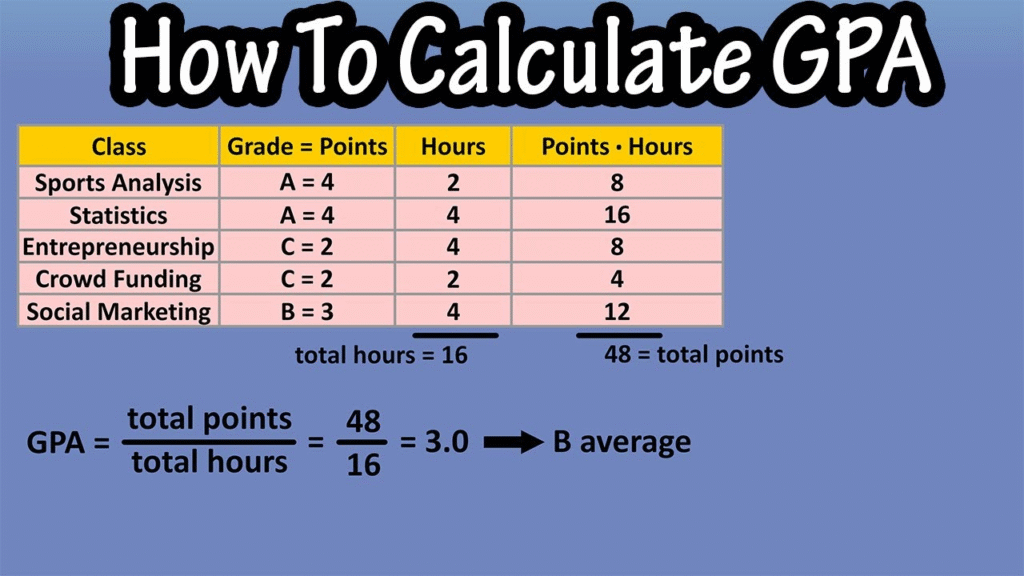
GPA (Grade Point Average) is the numerical summary of your academic performance over time. A 10/15 on a single quiz won’t single-handedly destroy your GPA, but repeated scores in that range will.
Standard 4.0 GPA Conversion Table
| Letter Grade | GPA Points (Unweighted) |
| A | 4.0 |
| A− | 3.7 |
| B+ | 3.3 |
| B | 3.0 |
| B− | 2.7 |
| C+ | 2.3 |
| C | 2.0 |
| C− | 1.7 |
| D+ | 1.3 |
| D | 1.0 |
| D− | 0.7 |
| F | 0.0 |
A D grade (from 10/15 = 66.67%) contributes roughly 1.0 GPA points per credit hour. If your course is worth 3 credit hours and you earn a D, that pulls your semester GPA down significantly especially if you were aiming for a 3.0 or higher.
You might also be wondering whether 70 equals a 3.0 GPA it doesn’t; a 70% C grade yields around 2.0. A D from 66.67% drops you even further from that benchmark. If you’re tracking how one low score affects your standing, our guide on whether one C will hurt your GPA applies even more strongly to a D.
Weighted GPA vs. Unweighted GPA
Not all grades are created equal on the GPA scale. The distinction between weighted and unweighted GPA is critical for understanding how a 10/15 score plays out in different courses.
Unweighted GPA
Unweighted GPA treats every class the same. An A in gym class and an A in AP Chemistry both count as 4.0. Under this system, 10/15 (a D) in any class contributes 1.0 points regardless of the course’s difficulty.
Weighted GPA
Weighted GPA gives extra points to harder courses AP (Advanced Placement), IB (International Baccalaureate), and honors classes. The typical scale looks like this:
| Course Type | A = | B = | C = | D = |
| Regular | 4.0 | 3.0 | 2.0 | 1.0 |
| Honors | 4.5 | 3.5 | 2.5 | 1.5 |
| AP / IB | 5.0 | 4.0 | 3.0 | 2.0 |
So if you earned 10/15 (a D) in an AP course, it would still contribute roughly 2.0 weighted GPA points — the same as a C in a regular class. This is one reason why some students choose tougher courses even when they expect to struggle. To understand weighted GPA calculations more deeply, visit our weighted GPA calculator guide.
If you’re curious whether a 4.0 GPA means straight A’s or what a 5.0 GPA means in the USA, those answers are closely tied to whether your school uses weighted or unweighted scales.
How Assignment Weight Affects Your 10/15 Grade
A single 10/15 score doesn’t exist in isolation — it’s part of a larger grade calculation. How much it hurts (or doesn’t) depends entirely on the weight of that assignment.
Here’s a practical example:
Scenario: Your class grading breakdown
- Homework: 20% of final grade
- Quizzes: 30% of final grade
- Tests: 50% of final grade
If you scored 10/15 (66.67%) on a quiz, that affects only 30% of your grade. If your other grades are strong, it might barely move your final percentage. But if 10/15 was your test score, representing 50% of the grade, the damage is much larger.
Learning how much a test grade is worth in your class is essential before panicking about any single score. Similarly, understanding what the weight of a test grade is helps you prioritize where to focus your effort.
For similar fraction scores, see also what grade is 9/11 on a test and what grade is 15/20 both are instructive comparisons around this performance range.
Standards-Based Grading: A Different Lens
An increasing number of schools — particularly at the middle school level — are moving toward standards-based grading (SBG). Rather than averaging percentage scores, SBG measures whether a student has mastered specific learning targets.
Under SBG, a 10/15 score wouldn’t necessarily earn a D. Instead, the teacher would evaluate which questions the student got wrong and whether those wrong answers indicate a fundamental misunderstanding of a key standard. A student might score 1–4 on each standard:
| SBG Score | Meaning |
| 4 | Exceeds the standard |
| 3 | Meets the standard |
| 2 | Approaching the standard |
| 1 | Beginning to understand |
This system prioritizes growth and mastery over test-day performance. A 10/15 in a standards-based classroom could be viewed very differently depending on which 5 questions were missed.
Pass/Fail Grading
Some courses — especially college electives, graduate seminars, and professional development programs — use a simple Pass/Fail system. Under most pass/fail policies, a score of 60% or 70% is the minimum threshold to pass.
At 66.67%, a 10/15 score lands in a gray area:
- Passes if the threshold is 60% or 65%
- Fails if the threshold is 70%
Pass/fail grades typically don’t affect your GPA in most university systems, but failing a required pass/fail course can delay graduation. Check your institution’s specific policy before assuming a D-level score is safe.
International Grading Systems: How 10/15 Translates Globally
A 66.67% means very different things depending on where you’re studying.
International Grade Comparison for 66.67%
| Country / System | Grade | Meaning |
| United States | D | Passing, below average |
| United Kingdom | Pass (Lower Second) | Roughly 2:2 (50–59% is Third) |
| Canada | D / 60–69% band | Passing, below average |
| Germany | 4 (on 1–6 scale) | Ausreichend (Sufficient) |
| France | 13.3 / 20 | Assez Bien (Fairly Good) |
| India (CBSE) | Grade C1 | 67% is actually decent here |
| Australia | Pass (P) | Many unis set pass at 50% |
| GPA (International) | ~1.0 | Below average |
The French system is particularly worth noting: France grades out of 20, and 10/15 translates to roughly 13.3/20 which is considered “assez bien” (fairly good). The same raw score earns entirely different academic respect depending on which grading culture surrounds it.
Common Grading Conversion Methods
Method 1: Simple Percentage Conversion
The method used throughout this article:
Grade % = (Score ÷ Total) × 100 = (10 ÷ 15) × 100 = 66.67%
Method 2: Letter Grade Lookup
Once you have 66.67%, match it to your school’s letter grade table (usually a D under U.S. standards).
Method 3: GPA Conversion
Map the letter grade to GPA points using the standard 4.0 scale:
- D = 1.0 GPA points
Method 4: Weighted Average (for final grades)
If multiple scores are involved, use a weighted average. Our weighted average grade calculator walks through the exact steps.
Method 5: Final Grade Projection
To know exactly what you need on remaining assignments to raise your grade, use a what grade do I need calculator. This tells you the target score for your next test or assignment.
How to Calculate Your Grade After Getting 10/15
Here’s a step-by-step walkthrough for calculating your overall class grade after receiving a 10/15 on one assignment.
Example Setup:
- Assignment 1 (10%): 88%
- Quiz (20%): 10/15 = 66.67%
- Midterm (30%): 75%
- Final (40%): not yet taken
Grades so far (weighted):
- Assignment 1: 88 × 0.10 = 8.8 points
- Quiz: 66.67 × 0.20 = 13.33 points
- Midterm: 75 × 0.30 = 22.5 points
- Total earned so far: 44.63 points out of a possible 60%
To find current percentage (out of completed work):
44.63 ÷ 60 × 100 = 74.4% (C grade currently)
To find what you need on the final to reach a B (80%): Use the final grade calculator or work backwards:
(80 − 44.63) ÷ 40 × 100 = 88.4% on the final
This kind of calculation helps you set realistic, targeted goals. For a complete breakdown of how teachers grade assignments like this, read our guide on how to grade assignments and how to calculate final grades.
Mistakes Students Make When Interpreting a 10/15 Grade
Mistake 1: Treating All Assignments as Equal
A 10/15 on a low-weight homework assignment barely affects your final grade. The same score on a midterm worth 40% is a serious problem. Always check the weight before reacting.
Mistake 2: Confusing 66.67% with “Almost 70%”
Being 3.33 percentage points away from a C sounds close, but in terms of GPA, the D vs. C gap is enormous 1.0 vs. 2.0 points. Don’t mentally round up.
Mistake 3: Ignoring the Cumulative Effect
One D won’t ruin a semester. But three D’s in different subjects absolutely will. If you want to understand whether a 3.5 GPA is still achievable for college, our guide on whether a 3.5 GPA is good for college puts things in perspective.
Mistake 4: Not Checking if Rounding Applies
Some teachers round 89.5% up to an A. If you’re sitting at 66.5%, it might round up to 67% — still a D, but worth verifying. Read our breakdown of whether 89.5 is an A or B to understand how rounding policies work at the grade boundary.
Mistake 5: Misunderstanding Grade Curves
If your teacher curves grades, a 10/15 might not stay at 66.67%. Understand how to curve test grades before assuming your raw score is final.
Mistake 6: Forgetting AP Test Grading Works Differently
AP exams use a 1–5 scale, not a percentage. A raw score that translates to 66% on a regular test might still earn a 3 or 4 on an AP exam due to the curve and rubric. Learn how AP tests are graded before comparing AP and regular scores.
Grading Scale Comparison Table
| Scale Type | Score for 10/15 | Label | Notes |
| Percentage | 66.67% | — | Raw calculation |
| Standard U.S. Letter | D | Below Average | Most public schools |
| 4.0 GPA (Unweighted) | ~1.0 | D | Affects cumulative GPA |
| Weighted GPA (AP) | ~2.0 | D in AP = C equivalent | Higher weighting |
| Pass/Fail (60% threshold) | Pass | Minimum passing | Some college electives |
| Pass/Fail (70% threshold) | Fail | Below cutoff | Common in some states |
| Standards-Based | Varies | Depends on standards mastered | Not directly comparable |
| French System | 13.3/20 | Assez Bien | Roughly “fairly good” |
| German System | 4 | Ausreichend | Sufficient |
Practical Tips for Improving Your Grade From 10/15
If 10/15 is your recent score and you want to do better, here are targeted, actionable strategies not generic advice.
1. Analyze What You Got Wrong — Specifically
Don’t just look at the number 10/15. Go through each wrong answer. Were your errors conceptual (you didn’t understand the material), procedural (you knew the material but made mistakes), or careless (you rushed)? Each type calls for a different fix.
2. Calculate What You Need Going Forward
Use a semester grade calculator to determine exactly what scores you need on upcoming work to recover. Knowing your target makes studying purposeful rather than frantic.
3. Use Active Recall, Not Passive Re-Reading
Research consistently shows that testing yourself on material beats re-reading it by a wide margin. Create flashcards, practice problems, or teach the concept to someone else.
4. Prioritize High-Weight Assignments
If tests are 50% of your grade, put 50% of your study time there. Match your effort to the grading structure.
5. Ask Your Teacher About Grade Recovery Options
Many teachers offer test corrections, extra credit, or make-up assignments. A score of 10/15 is not necessarily permanent. Even partial credit for corrections can shift a D toward a C.
6. Address GPA Recovery Strategically
If your overall GPA has slipped, understand whether you can raise your GPA quickly and what realistic timelines look like. GPA recovery is possible but requires sustained effort across multiple courses.
7. Understand Your Grade in Context Before You Panic
Sometimes a class is hard and a 10/15 is actually above the class average. Check with your teacher — context matters. Understanding what a C vs C+ means for your grade or whether 78 is a C can help you calibrate your expectations.
How Grading Scales Affect GPA and Academic Performance
The grading scale your school uses has a direct, compounding effect on your GPA. Here’s why:
Scale difference example: If your school uses a 90/80/70/60 scale (as above), a 69% is a D. If it uses a 93/83/73/63 scale (more common at competitive private schools), a 69% is an F. The same performance results in wildly different academic records.
This matters most when applying to college. Admissions officers are supposed to account for school-specific grading rigor, but in practice, GPA remains one of the most visible numbers on your transcript. A chain of D grades from 10/15-level scores will register even when the context is taken into account.
For a deeper look at calculating overall performance across multiple assignments, our guides on how to calculate grades in class, how to calculate grade average, and how to calculate total grade walk through the mechanics step by step.
FAQ: 10/15 Grade Questions Answered
What is 10 out of 15 as a percentage?
10 out of 15 is 66.67%. You divide the points earned (10) by the total possible points (15) and multiply by 100.
Is 10/15 a passing grade?
In most U.S. schools, yes — the minimum passing grade is 60%, and 66.67% clears that bar. However, if your school sets the passing threshold at 70%, then 10/15 would be a failing grade. Always confirm your institution’s cutoff.
What letter grade is 10/15?
Under the standard U.S. grading scale, 10/15 (66.67%) is a D. Some schools with plus/minus grading may classify it as a D+ if the D+ range starts at 65% or 66%.
How does a D grade affect my GPA?
A D typically contributes 1.0 GPA points per credit hour on an unweighted 4.0 scale. If you need to maintain a 2.0 or higher for scholarship requirements or academic standing, multiple D grades will put you at risk. Learn more about calculating a GPA from letter grades.
Is 10/15 the same as 66.67% everywhere?
The raw percentage is always 66.67%, but what that percentage means varies by grading scale and country. In France, it translates to roughly 13.3/20 (fairly good). In Germany, it’s a 4 (sufficient). The number is universal; the evaluation is not.
Will a 10/15 grade prevent me from going to college?
A single 10/15 grade won’t prevent college admission, but a pattern of D-level scores across your transcript will lower your GPA significantly. Selective colleges typically want a 3.5 GPA or higher. Community colleges and less selective schools generally accept students with lower GPAs.
Can a test curve improve my 10/15 score?
Yes. If your teacher applies a curve — either by adding points to all scores or by grading on a relative scale — your 10/15 could improve. Understand how test curves work to know what to expect.
Is 60% an F or a D?
This depends on the school. Under most U.S. grading scales, 60–69% is a D and below 60% is an F. Check out whether a 60 is an F or D for a full breakdown.
How do I know what grade I need to bring my average up?
Use the what grade do I need calculator. Enter your current grade, the weight of upcoming assignments, and your target final grade. The calculator tells you the exact score needed on each remaining assessment.
Does a D grade in high school affect college financial aid?
It can. Many scholarships and financial aid packages require maintaining a minimum GPA (often 2.0 or higher). Consistently earning D grades can put those awards at risk. Check your specific aid agreement’s academic requirements.
Key Takeaways
- 10 out of 15 = 66.67%, which is a D under the standard U.S. grading scale.
- A D contributes approximately 1.0 GPA points per credit hour on an unweighted 4.0 scale.
- The significance of this score depends heavily on assignment weight, grading scale, and course type.
- In weighted GPA systems, a D in an AP course still contributes more than a D in a regular course.
- Internationally, 66.67% means very different things — from “sufficient” in Germany to “fairly good” in France.
- Standards-based grading and pass/fail systems evaluate 10/15 differently than percentage-based systems.
- One low score won’t ruin your GPA, but a pattern of D-level performance will compound significantly over time.
- You can recover: calculate what you need on remaining assignments, address the specific gaps in your knowledge, and ask your teacher about available options.
Conclusion
A score of 10/15 is a signal worth paying attention to. At 66.67%, it sits at the lower end of the passing range in most U.S. schools, earning a D grade and contributing only 1.0 GPA points. That’s not a catastrophe but it’s a clear indicator that something needs to change, whether that’s study strategy, time management, or simply getting clearer on the material before the next assessment.
The good news: grades are not permanent. With the right tools including a final grade calculator, a clear understanding of your grading scale, and a targeted improvement plan you can move that number in the right direction. The most important step is understanding exactly where you stand, which this guide has given you, and then acting on it.