Scoring 19 out of 20 on a test, assignment, or project is something most students aim for. But what does that score actually mean when it gets translated into a letter grade, a GPA point, or a percentage on your transcript? And how does a single score like 19/20 fit into the much larger picture of grading systems used across schools, colleges, and countries?
This guide answers all of that — in plain language. Whether you are a student checking your standing, a parent tracking your child’s progress, or a teacher explaining grading to your class, you will find everything you need right here.
What Does 19/20 Mean as a Grade?
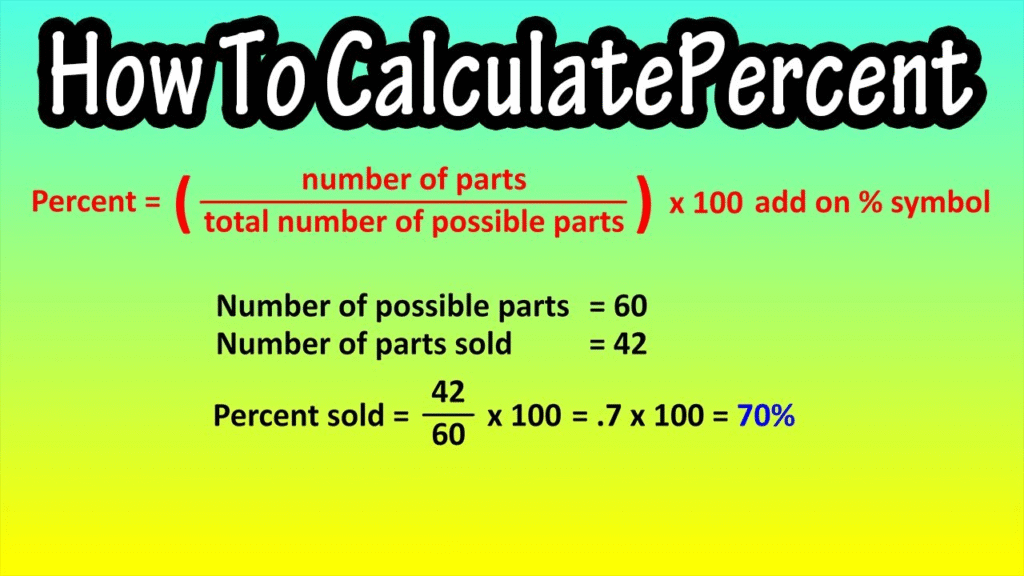
A score of 19/20 means you answered 19 out of 20 possible points correctly — or earned 19 out of 20 available marks. To convert this to a percentage, use the simple formula:
Percentage = (Score Earned ÷ Total Possible Points) × 100
So: (19 ÷ 20) × 100 = 95%
A 95% is an outstanding result. In virtually every grading scale used in the United States — and in most countries worldwide — a 95% falls solidly in the A range. It signals mastery of the material, strong attention to detail, and consistent academic effort.
If you want to quickly calculate your grade percentage for any score, a dedicated calculator makes this instant.
What Are Grading Scales — and Why Do Schools Use Them?
A grading scale is a standardized system that converts raw scores (like 19/20) into a format — a letter, percentage, number, or descriptor — that communicates academic performance at a glance.
Schools use grading scales for several practical reasons:
- Standardization: A consistent scale lets teachers, students, parents, and colleges interpret performance the same way.
- Fairness: Scales make it easier to compare student work across different assignments, teachers, and institutions.
- Motivation: Clear benchmarks give students a measurable goal to work toward.
- Decision-making: Colleges, employers, and scholarship committees use grades to evaluate candidates quickly.
The most common grading scales in use today are the percentage scale, the letter grade scale, the GPA scale, the standards-based scale, and the pass/fail scale. Each one has specific use cases — and understanding all of them helps you interpret any score you receive, including 19/20.
The Percentage Grading Scale
The percentage scale is the most widely used system in U.S. schools and universities. Every raw score is converted into a number between 0 and 100.
Here is how 19/20 fits into the standard percentage scale:
| Percentage Range | Letter Grade | Performance Level |
| 97–100% | A+ | Exceptional |
| 93–96% | A | Excellent |
| 90–92% | A− | Very Good |
| 87–89% | B+ | Above Average |
| 83–86% | B | Good |
| 80–82% | B− | Satisfactory |
| 77–79% | C+ | Average |
| 73–76% | C | Acceptable |
| 70–72% | C− | Marginal |
| 67–69% | D+ | Below Average |
| 63–66% | D | Poor |
| 60–62% | D− | Very Poor |
| Below 60% | F | Failing |
A 19/20 = 95%, which sits firmly in the A range — specifically an A in most schools, or an A+ in institutions where 95%+ qualifies for that distinction.
Need to figure out what grade an 80% earns or what grade a 75% represents? The percentage scale makes those lookups straightforward.
The Letter Grading Scale
The letter grading system translates percentages into the familiar A, B, C, D, F range. It originated in U.S. education in the early 20th century and remains dominant today.
| Letter Grade | Typical Percentage | GPA Equivalent | Meaning |
| A+ | 97–100% | 4.0 | Outstanding |
| A | 93–96% | 4.0 | Excellent |
| A− | 90–92% | 3.7 | Very Good |
| B+ | 87–89% | 3.3 | Good |
| B | 83–86% | 3.0 | Above Average |
| B− | 80–82% | 2.7 | Satisfactory |
| C+ | 77–79% | 2.3 | Average |
| C | 73–76% | 2.0 | Acceptable |
| C− | 70–72% | 1.7 | Marginal |
| D+ | 67–69% | 1.3 | Below Passing |
| D | 63–66% | 1.0 | Poor |
| D− | 60–62% | 0.7 | Near Failing |
| F | Below 60% | 0.0 | Failing |
Since 19/20 equals 95%, the corresponding letter grade is an A. Some schools with fine-grained scales would award an A+ here, but an A is the standard designation.
One question that often comes up at borderline scores: is 89.5% an A or a B? That depends entirely on how your school applies rounding rules — worth checking with your teacher.
Similarly, whether 70% earns a C or D varies slightly by institution. Knowing your school’s specific cutoffs matters.
The GPA Grading Scale
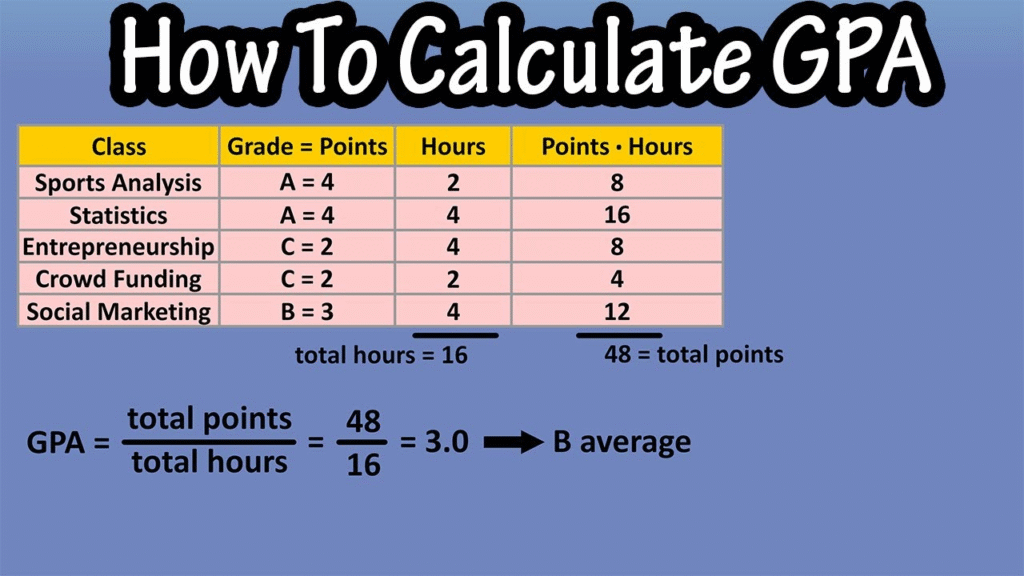
GPA (Grade Point Average) is the numerical summary of your letter grades. Most U.S. high schools and colleges use a 4.0 scale, where each letter grade carries a specific point value.
How GPA Is Calculated
The standard formula is:
GPA = Sum of (Grade Points × Credit Hours) ÷ Total Credit Hours
For example, if you earn an A (4.0) in a 3-credit class and a B (3.0) in a 3-credit class:
GPA = (4.0 × 3 + 3.0 × 3) ÷ (3 + 3) = 21 ÷ 6 = 3.5 GPA
A score of 19/20 (95%, or an A) contributes 4.0 grade points per credit hour toward your GPA — the maximum possible on an unweighted scale.
Want to know if 70% equals a 3.0 GPA? It does not — a 70% typically converts to a C, which is a 2.0. Understanding this distinction is crucial when calculating your cumulative GPA.
For a deeper dive, you can calculate your GPA from letter grades step by step.
Weighted GPA vs. Unweighted GPA
This is one of the most misunderstood parts of the grading system — and it directly affects how a high score like 19/20 impacts your academic record.
Unweighted GPA
An unweighted GPA uses a straight 4.0 scale, regardless of how difficult the course is. A 95% in a regular English class gets the same 4.0 as a 95% in AP English.
- Maximum GPA: 4.0
- Does not account for course difficulty
Weighted GPA
A weighted GPA assigns extra points for honors, AP, or IB courses to reward students who challenge themselves.
| Course Level | Grade | Unweighted GPA | Weighted GPA |
| Regular | A | 4.0 | 4.0 |
| Honors | A | 4.0 | 4.5 |
| AP / IB | A | 4.0 | 5.0 |
| Regular | B | 3.0 | 3.0 |
| AP / IB | B | 3.0 | 4.0 |
This means a 19/20 (an A) in an AP class contributes 5.0 points to a weighted GPA — higher than any grade possible in a regular class.
Many students wonder: is a 4.0 GPA the same as straight A’s? On an unweighted scale, yes. On a weighted scale, you could have a GPA above 4.0 while still holding straight A’s.
If you are managing multiple advanced courses, learning how to calculate GPA with weighted grades helps you see the full picture.
Standards-Based Grading
Some K–12 schools — particularly at the elementary and middle school levels — use standards-based grading (SBG) instead of traditional letter grades. In this system, students are evaluated on how well they meet specific learning standards.
Typical SBG descriptors:
| Score | Label | Meaning |
| 4 | Exceeds Standard | Performance beyond grade-level expectations |
| 3 | Meets Standard | Solid mastery of the learning objective |
| 2 | Approaching Standard | Partial understanding; more practice needed |
| 1 | Below Standard | Minimal understanding; significant gaps remain |
A 19/20 in a traditional class would likely map to a 4 (Exceeds Standard) in an SBG context, since 95% signals strong mastery. However, SBG focuses on which standards a student has mastered rather than a single aggregate score.
Pass/Fail Grading
Some courses — especially electives, internships, and graduate seminars — use a simple Pass/Fail scale. There are no letter grades, no percentages, and no GPA impact (in most cases).
Typical cutoffs:
| Result | Minimum Percentage Required |
| Pass | Usually 60–70% |
| Fail | Below 60–70% |
A 19/20 (95%) easily clears the passing threshold in any Pass/Fail course. The trade-off is that a stellar score like 19/20 provides no GPA benefit in Pass/Fail mode — which is why high-achieving students sometimes prefer graded courses in their major.
International Grading Systems: How 19/20 Compares Globally
Education is global, and grading is not universal. Here is how a 95% (19/20) translates across major international systems:
| Country / Region | Grading Scale | Equivalent to 19/20 (95%) |
| United States | A (4.0 GPA) | A / A+ |
| United Kingdom | Percentage / Class | First Class Honours (70%+ for uni) |
| France | 0–20 scale | 19/20 (literally) |
| Germany | 1–6 scale (1 = best) | 1 (Sehr Gut / Very Good) |
| Canada | A / Percentage | A+ in most provinces |
| Australia | HD / D / C / P | High Distinction (85–100%) |
| India | Percentage | Distinction / O (Outstanding) |
| Japan | 100-point scale | 優 (Excellent / A) |
| Mexico | 0–10 scale | 9.5 (Sobresaliente) |
| Netherlands | 1–10 scale | 9.5 (Uitmuntend) |
It is worth noting that in France, the 20-point scale is standard — so a literal “19/20” is extremely prestigious. French teachers rarely award 20/20, making 19/20 practically the pinnacle of achievement.
How Grading Scales Affect GPA and Academic Performance
Every score you receive feeds into your GPA — but the weight of each score depends on how your institution structures its grading system.
Credit-Weighted GPA
Most colleges assign different credit values to different courses. A lab science worth 4 credits has more GPA impact than a 1-credit seminar. A 19/20 in a high-credit course boosts your GPA more than the same score in a low-credit elective.
You can use a weighted average grades calculator to account for this properly.
The Cumulative Effect
One high score does not make a GPA on its own. One low score does not ruin it either. Many students ask: will one C hurt my GPA? The honest answer is: it depends on how many courses you have already completed and what grades you hold in them. The more credits you have banked at an A, the smaller the impact of a single C.
Conversely, consistent high scores — like earning 19/20 on multiple assessments — compound positively. And if you are wondering whether a 3.5 GPA is good enough for college, a consistent run of A grades like 19/20 will get you there.
Common Grading Conversion Methods
Schools convert raw scores to letter grades and GPA using several methods:
Method 1: Straight Percentage Conversion
The simplest approach. Your raw score is converted to a percentage, then matched to the school’s grading scale.
19 ÷ 20 × 100 = 95% → A
Method 2: Curve Adjustment
When an exam is harder than expected, teachers may apply a curve to raise all scores proportionally. Curving test grades can shift a 19/20 to remain an A, or bump a lower score up a grade tier.
Method 3: Weighted Category System
Many classes assign different weights to different assignment types. For example:
| Category | Weight | Your Score | Weighted Score |
| Tests | 40% | 95% (19/20) | 38.0 |
| Homework | 30% | 88% | 26.4 |
| Quizzes | 20% | 90% | 18.0 |
| Participation | 10% | 85% | 8.5 |
| Total | 100% | — | 90.9% (A−) |
Even a strong 19/20 on tests does not guarantee an A if homework or quiz performance is lower. This is why understanding how much a test grade is worth in your specific class matters so much.
You can also check what weight a test grade carries in your overall class grade.
How to Calculate Grades Using Different Scales
Calculating Your Class Grade
To find your current class grade, add up all weighted scores across categories. Calculating your grades in class follows the same weighted average logic as the table above.
Calculating Your Final Grade
Calculating final grades requires you to account for every graded component — including any final exam. If your final exam is worth 30%, use this formula:
Final Grade = (Current Grade × Non-Exam Weight) + (Final Exam Score × Exam Weight)
If you need to know exactly what score to aim for on your final, a what grade do I need calculator solves this instantly.
Calculating Grade After a Test
If you just got your 19/20 back, you may want to know how it changes your overall standing. Calculating your grade after a test requires knowing your pre-test grade and the test’s weight in the course.
Calculating Semester Grade
At the end of a term, your semester grade calculation combines all assignments, tests, and quizzes — weighted by their respective categories — into one final mark.
Other Useful Conversions
- What grade is 9/11 on a test? — That is about 81.8%, a B−.
- What grade is 15/20? — That is 75%, a C.
- Is 78% a C? — In most schools, yes: a C+ or C depending on the cutoff.
- Is 60% an F or D? — Typically a D− or D, though some schools treat 60% as the minimum passing threshold.
How to Grade Assignments Fairly and Accurately
For teachers and instructors, grading consistency matters as much as scoring accuracy. Using a clear rubric, applying the same standards to every student, and providing actionable feedback are all part of grading assignments effectively.
When students see scores like 19/20, they should also receive feedback about the one point lost — not just the score itself. That context transforms a number into a learning opportunity.
Common Mistakes Students Make When Interpreting Grades
Mistake 1: Confusing a Single Score with a Final Grade
A 19/20 on one quiz is not your class grade. It is one data point. Your overall score depends on all assessments weighted together.
Mistake 2: Ignoring Category Weights
Many students believe that a high test score automatically produces a high class grade. If tests are only 40% of your grade, even a perfect 20/20 cannot rescue you from failing homework and quizzes.
Mistake 3: Misunderstanding GPA Thresholds
Students sometimes ask whether C is better than C+ — and of course it is not, but the confusion illustrates how easy it is to misread letter grade hierarchies. Always confirm whether your school uses plus/minus grades and what GPA points each carries.
Mistake 4: Not Knowing How AP Grades Work
AP courses have their own scoring system. How AP tests are graded differs from standard school grading — scores run from 1 to 5, not letter grades. A score of 19/20 on an AP practice test does not directly map to a 5 on the AP exam.
Mistake 5: Assuming All Schools Use the Same Cutoffs
At one school, 90% might be the minimum for an A. At another, it may be 93%. Always check your institution’s official grading policy.
Tips for Improving Your Grades — and Getting More 19/20s
Getting close to a perfect score consistently takes more than just studying harder. It takes studying smarter.
1. Master the material before test day. Active recall (testing yourself) beats rereading notes by a wide margin. Use flashcards, practice problems, and past exams.
2. Understand the question format. Many points are lost not because students lack knowledge, but because they misread what was asked. Practice interpreting questions carefully.
3. Review errors immediately. When you lose a point — as in 19/20 instead of 20/20 — track down exactly why. Was it a careless calculation? A misread question? A knowledge gap? Each type of error requires a different fix.
4. Know your grade at all times. Waiting until finals week to check your standing is a common mistake. Use a grade average calculator regularly throughout the semester so there are no surprises.
5. Ask teachers for feedback early. Feedback before the final exam is actionable. Feedback after it is just information.
6. Prioritize high-weight assignments. A 19/20 on a quiz worth 5% of your grade matters less than a 15/20 on a test worth 40%. Allocate study time accordingly.
7. Explore grade recovery options. If your GPA has slipped, investigate whether you can raise your GPA quickly — and learn the realistic timeline for doing so.
Understanding 5.0 GPA Scales and Advanced Programs
Some high schools — particularly those with advanced honors programs — use a 5.0 GPA scale for weighted courses. On this scale, a 19/20 in an AP class could earn a 5.0, while the same score in a regular class earns a 4.0.
If you are wondering what a 5.0 GPA means in the U.S., it signals exceptional performance in weighted coursework — and it is becoming more common at competitive high schools nationwide.
Grading Scale Quick Reference: 19/20 Across Systems
| Grading System | 19/20 Equivalent | Label |
| U.S. Percentage | 95% | Excellent |
| U.S. Letter Grade | A | Excellent |
| U.S. GPA (4.0) | 4.0 | Highest Unweighted |
| U.S. GPA (5.0 AP) | 5.0 | Highest Weighted |
| UK (Undergraduate) | First Class | Distinction |
| France | 19/20 | Near Perfect |
| Germany | 1 (Sehr Gut) | Very Good |
| Australia | High Distinction | HD |
| India | O / Distinction | Outstanding |
| Mexico | 9.5 / 10 | Sobresaliente |
Key Takeaways
- 19/20 = 95%, which earns an A in virtually every U.S. grading scale.
- On a standard 4.0 GPA scale, a 19/20 contributes the maximum 4.0 grade points per credit.
- On a weighted 5.0 scale (AP/IB courses), a 19/20 earns 5.0 grade points.
- Grading scales include percentage, letter grade, GPA, standards-based, and pass/fail systems — each serving a different purpose.
- Internationally, 19/20 is considered outstanding in virtually every educational system.
- A single high score helps your GPA, but consistent performance across all weighted categories is what determines your final class grade.
- Understanding your school’s specific grading cutoffs — especially at borderline percentages — prevents costly misinterpretations.
- Use grade calculators throughout the semester, not just at the end, to stay in control of your academic performance.
Frequently Asked Questions (FAQ)
What letter grade is a 19/20?
A 19/20 converts to 95%, which is an A on the standard U.S. letter grading scale. Some schools with more detailed scales — particularly at the college level — would assign this an A (93–96% range). Schools with a stricter A+ threshold of 97%+ would still award an A.
What GPA does a 19/20 give you?
On a standard 4.0 unweighted GPA scale, a 19/20 (95%, or an A) earns 4.0 grade points. On a weighted 5.0 scale for AP or IB courses, the same score earns 5.0 grade points.
Is 19/20 a good grade?
Yes — 19/20 is an excellent grade by any standard. It indicates near-perfect mastery of the subject and represents performance in the top tier of students. In most academic systems worldwide, a 95% or 19/20 is considered outstanding.
How does 19/20 compare to 20/20?
A 20/20 is a perfect score (100%), while a 19/20 is 95% — a difference of just 5 percentage points. Both sit in the A range on standard scales. Depending on your school’s cutoffs, both may earn the same letter grade (A), or 20/20 may qualify for an A+ where 19/20 earns an A.
Does 19/20 affect your GPA significantly?
Yes. Because a 19/20 earns maximum or near-maximum GPA points (4.0 on unweighted, 5.0 on weighted), every course where you score this high strengthens your cumulative GPA. The effect is larger in higher-credit courses.
What is the difference between weighted and unweighted GPA for a 19/20?
On an unweighted 4.0 scale, a 19/20 in any course earns 4.0 points. On a weighted scale, a 19/20 in an AP or IB course earns 5.0 points — rewarding the added difficulty of advanced coursework.
How does 19/20 translate in international grading systems?
A 95% (19/20) translates to: First Class Honours in the UK, 1 (Sehr Gut) in Germany, High Distinction in Australia, O/Distinction in India, and Sobresaliente (9.5/10) in Mexico. In France, a literal 19/20 on the 20-point scale is considered near-exceptional.
Can a 19/20 help me qualify for scholarships or honors programs?
Yes. Consistent high scores like 19/20 contribute to the strong GPA that most scholarship programs require. Many merit scholarships require a minimum 3.5 or 3.7 GPA — grades in the A range across courses, as 19/20 earns, help meet and exceed those thresholds.
What is the pass/fail equivalent of 19/20?
In any standard pass/fail course (where the passing threshold is typically 60–70%), a 19/20 (95%) is a clear Pass. However, it earns no additional GPA credit beyond the pass designation.
How do I use 19/20 to calculate my overall class grade?
Multiply the grade percentage (95%) by the weight that particular assignment carries in your class. Then add it to your scores from other categories. For example, if tests are worth 40% of your grade: 95% × 0.40 = 38 points from tests. Add your other weighted scores to find your total. You can use a total grade calculator to handle this automatically.
Conclusion
A score of 19/20 is more than just a number — it is a meaningful signal of academic strength that carries weight across every grading system covered in this guide. Whether it shows up as a 95%, an A, a 4.0 GPA contribution, or a near-perfect mark on a French 20-point scale, the message is consistent: this is excellent work.
Understanding why it is excellent — and how it fits into the broader landscape of grading scales, GPA calculations, and academic performance — gives students, parents, and educators the context to act on that information strategically. A 19/20 today builds toward the GPA, honors recognition, and scholarship opportunities you are working toward tomorrow.
Use your school’s grading scale as a roadmap, not just a report card. Track your grades throughout the semester, understand how each assignment is weighted, and know the difference between your unweighted and weighted GPA. With that knowledge, a score like 19/20 becomes exactly what it should be: a clear step in the right direction.